
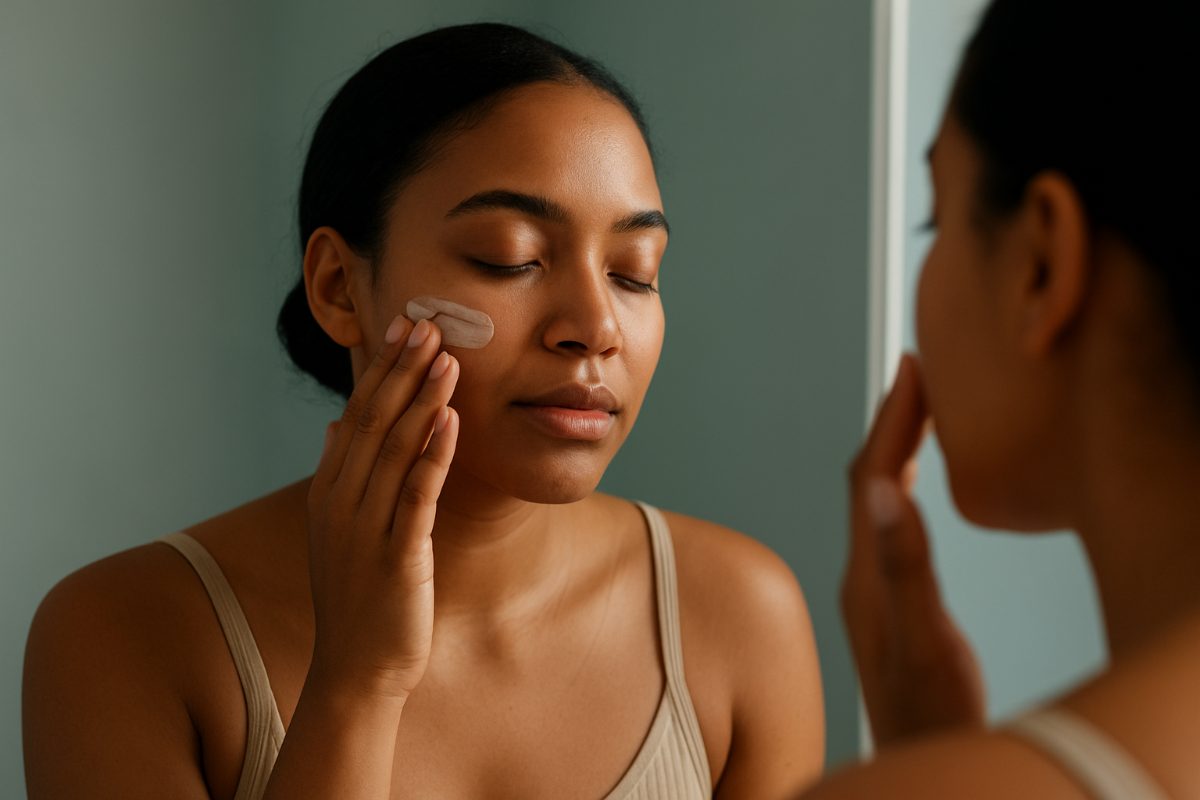

You’ve been caring for a dark spot for weeks, yet it still catches your eye in the mirror. That can feel discouraging, especially when you’re new to skincare. Uneven-looking tone can involve more than one pigment pathway, so understanding what your routine is designed to do can help you make thoughtful choices without trying to change your natural skin colour.

Dark spots involve more than one pathway
Melanin is the pigment made by specialised skin cells, and it has a protective role. When melanin production or distribution is uneven, dark spots and an uneven-looking tone may become visible. A spot isn’t simply a surface mark to scrub away; different processes can shape how pigment appears in the skin.
Brightening skincare research considers several of these processes. Laboratory research has explored kānuka leaf extract in relation to melanin production and pigmentation-related proteins. Research has also examined how niacinamide may influence the movement of melanin-containing structures to nearby skin cells. These are areas of investigation, not a guarantee that one ingredient will remove every spot.

Why progress can feel uneven
A routine that focuses on one approach may not address the full picture of visible pigmentation. That can help explain why a spot still looks noticeable when you’re using a product labelled “brightening”. Adding several strong products all at once isn’t necessarily a better plan, either. Give each change time, and notice how your skin responds before introducing another step.
Be wary of dramatic, rapid-lightening promises, particularly when you can’t confirm where a product came from. A label or online claim alone doesn’t tell you whether a product is right for your routine. Keep your goal centred on caring for uneven-looking tone, rather than pursuing a fast transformation or a change to your natural skin colour.
Build a steady beginner routine
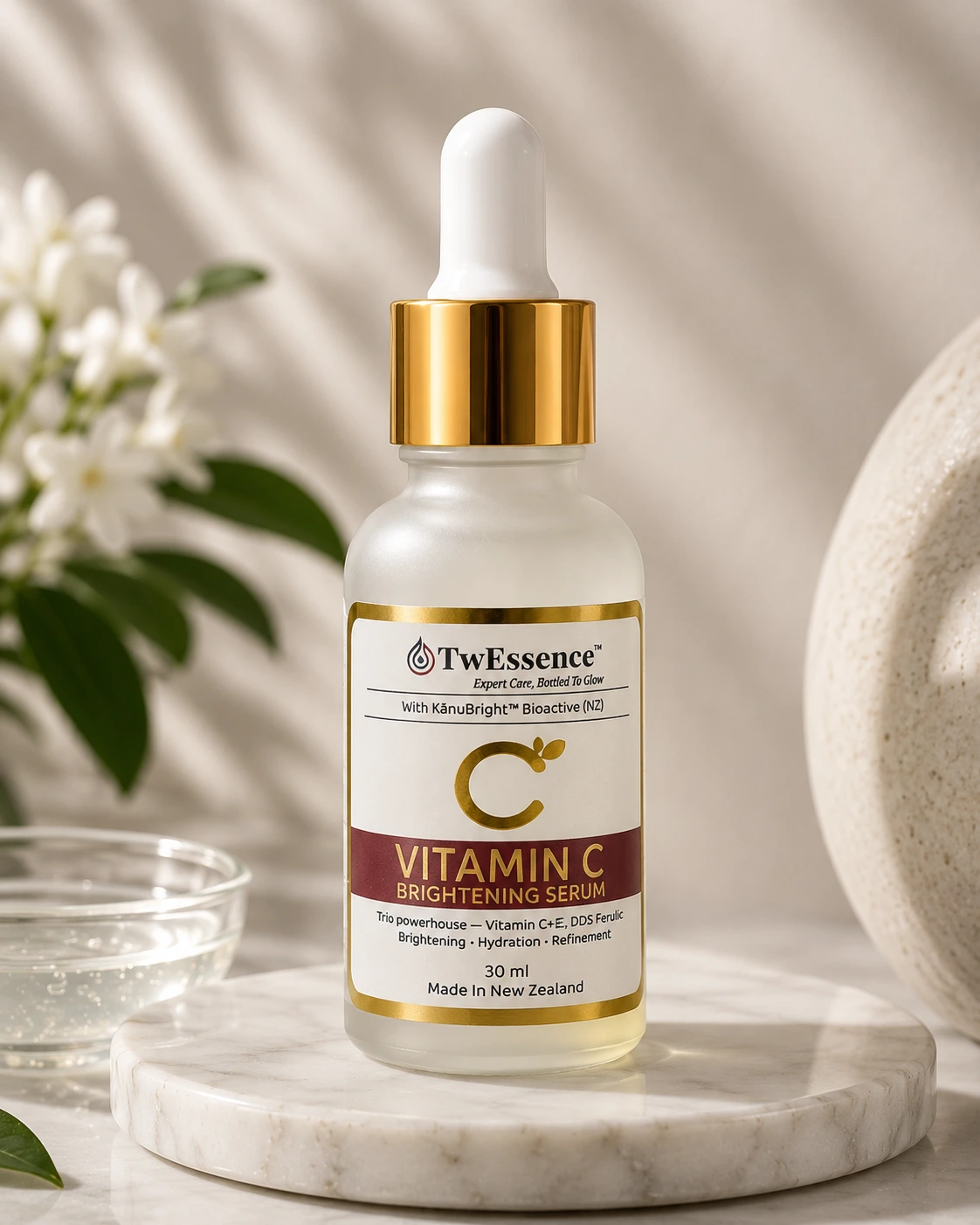
Start with a few steps you can repeat on ordinary days. If you choose a brightening serum, follow the directions for that product. TwEssence guidance for its Vitamin C+E Brightening Serum recommends using a broad-spectrum sunscreen as part of your morning routine. In New Zealand, where UV can be strong, or during a Dhaka commute, making sunscreen a regular morning habit can be more practical than treating it as an occasional extra.
If you’re considering exfoliation, take a measured approach. TwEssence guidance for AHA BHA Serum recommends starting with one or two evening uses per week, applying it to clean, completely dry skin. Follow with a moisturiser or cream, patch test first, and use broad-spectrum SPF 30+ every morning. Don’t use it in the same routine as retinol or Vitamin C serum; schedule those products for different days or evenings. The guidance allows for consistent weeks before expecting visible clarity, rather than overnight perfection.
TwEssence quick guide
Dark Spot Routine Basics
Pigment pathways
Uneven production and distribution can shape visible pigmentation.
Kānuka research
Laboratory research explored kānuka and pigmentation-related activity.
Niacinamide research
Research examined its influence on melanin-structure transfer.
Start slowly
AHA BHA guidance begins at one or two evenings weekly.
Patch test first, and apply broad-spectrum SPF 30+ every morning when using AHA BHA.
TwEssence™ · Expert Care, Bottled To Glow.
Keep your expectations skin-kind
Choose products for a clear role and introduce them thoughtfully. For AHA BHA Serum, the product guidance suggests testing a small amount on the inner arm and leaving it for 24 hours. If you notice irritation, don’t try to compensate by exfoliating more or layering on extra products. A routine should be manageable, not a test of how much your skin can tolerate.
Consistency doesn’t mean using every product every day. It means keeping to a considered routine and giving your skin time to respond. If your mornings are rushed before work or a gym session, decide where sunscreen fits before you leave home. In the evening, keep exfoliation to the recommended starting frequency rather than adding extra applications because a spot is still visible.
The aim is to support a more even-looking complexion, not to lighten your natural skin colour. Patient, consistent care is a more grounded starting point than chasing a fast transformation.

Tips you can use today
- Choose a simple routine you can repeat instead of adding several new products at once.
- Patch test new products; for AHA BHA Serum, follow the 24-hour inner-arm guidance.
- Begin AHA BHA Serum one or two evenings per week, on clean, fully dry skin.
- Apply broad-spectrum SPF every morning; when using AHA BHA Serum, follow its SPF 30+ guidance.
- Be cautious about dramatic rapid-lightening promises, especially when a product’s source is unclear.
TwEssence connection
If a brightening step suits your routine, explore the Vitamin C+E Brightening Serum. TwEssence guidance recommends pairing it with broad-spectrum sunscreen in the morning. Keep your other steps simple while you see how your skin responds.
FAQs
Why can a dark spot still look visible after using brightening skincare?
Uneven tone can involve melanin production as well as its distribution. One product or approach may not address every part of that picture, and visible clarity can take consistent weeks.
Can I use AHA BHA Serum with retinol?
TwEssence guidance advises against using AHA BHA Serum and retinol in the same routine. Introduce exfoliation gradually and use the products on different days or evenings.
What SPF should I use with AHA BHA Serum?
Use broad-spectrum SPF 30+ every morning. The product guidance also recommends applying AHA BHA Serum in the evening.
A calmer way forward
Dark spots can look persistent because uneven pigmentation involves more than one process. Choose products thoughtfully, follow their directions and give a steady routine time to work. You don’t need to pursue a different natural skin colour to care for uneven-looking tone.